Atlanta’s art scene doesn’t sprawl — it pockets. The best neighborhoods in Atlanta for art and local culture are smaller and stranger than most travel guides admit, and if you wander even a few blocks in the wrong direction, you’ll miss the whole thing.
Most first-timers expect a tidy arts quarter with gallery signs and coffee shops on every corner. What you actually get are warehouse corridors with hand-painted doors, a legal graffiti tunnel that smells like spray paint on a warm afternoon, and historic blocks where civil rights history and contemporary murals sit about fifteen feet apart. That contrast is genuinely the point.
I’ve spent time in most of these pockets, and a few surprised me. Here’s what I’d tell a friend who had four days and wanted to see something real.
Castleberry Hill and Its Warehouse Roots
Castleberry Hill became Atlanta‘s first official arts district in 1995, and it still carries that original scrappiness. It sits just southwest of downtown, maybe a ten-minute walk from Mercedes-Benz Stadium, and the core is roughly eight square blocks. Don’t let the size fool you. Around 30 working studios and galleries are crammed into repurposed warehouses, and on Art Stroll nights (second Friday of each month) the whole district opens up in a way that feels genuinely communal rather than performative.
Studio rents here run roughly $1.50 to $2.50 per square foot, which is why working artists actually stay instead of getting pushed out. The buildings date mostly from the early 1900s, and the bones show: exposed brick, freight elevators, loading docks that now double as outdoor seating. If you’re choosing between this and a more polished gallery strip, come here first.
Little Five Points to Inman Park
Little Five Points is where Atlanta’s counterculture landed in the 1970s and never quite left. The commercial strip on Moreland Avenue has record shops, vintage clothing, and murals that get repainted often enough to feel alive rather than preserved. The Goat Farm Arts Center, technically in West Midtown but closely tied to the L5P creative community, hosts events year-round across a 12-acre industrial campus. Their residency program has supported over 200 artists since the early 2000s.
Walk ten minutes east and you’re in Inman Park, Atlanta’s first planned suburb from 1889. The Victorian houses are immaculate, and the neighborhood hosts its own festival each April that draws around 30,000 people over a weekend. The transition between the two feels abrupt in a good way: one block is hand-lettered punk show flyers, the next is a wraparound porch with rocking chairs.
Ponce City Market sits at the northern edge of this corridor. It opened in 2014 inside a 1926 Sears, Roebuck building, and the restoration cost around $200 million. The ground floor has food and retail, but the upper floors hold creative offices and event space that keep a working energy in the building. The rooftop amusement park is cheesy in a self-aware way, and worth the $15 ticket on a clear evening.
Sweet Auburn and Old Fourth Ward
Sweet Auburn is the birthplace of the civil rights movement in a very literal sense. Martin Luther King Jr. was born on Auburn Avenue in 1929, and the block containing his birth home and Ebenezer Baptist Church is now a National Historic Site. But Sweet Auburn is more than a museum district. In the surrounding blocks you’ll find Black-owned businesses, murals commissioned through the Sweet Auburn Works program, and a cultural density that most newer Atlanta neighborhoods don’t come close to matching.
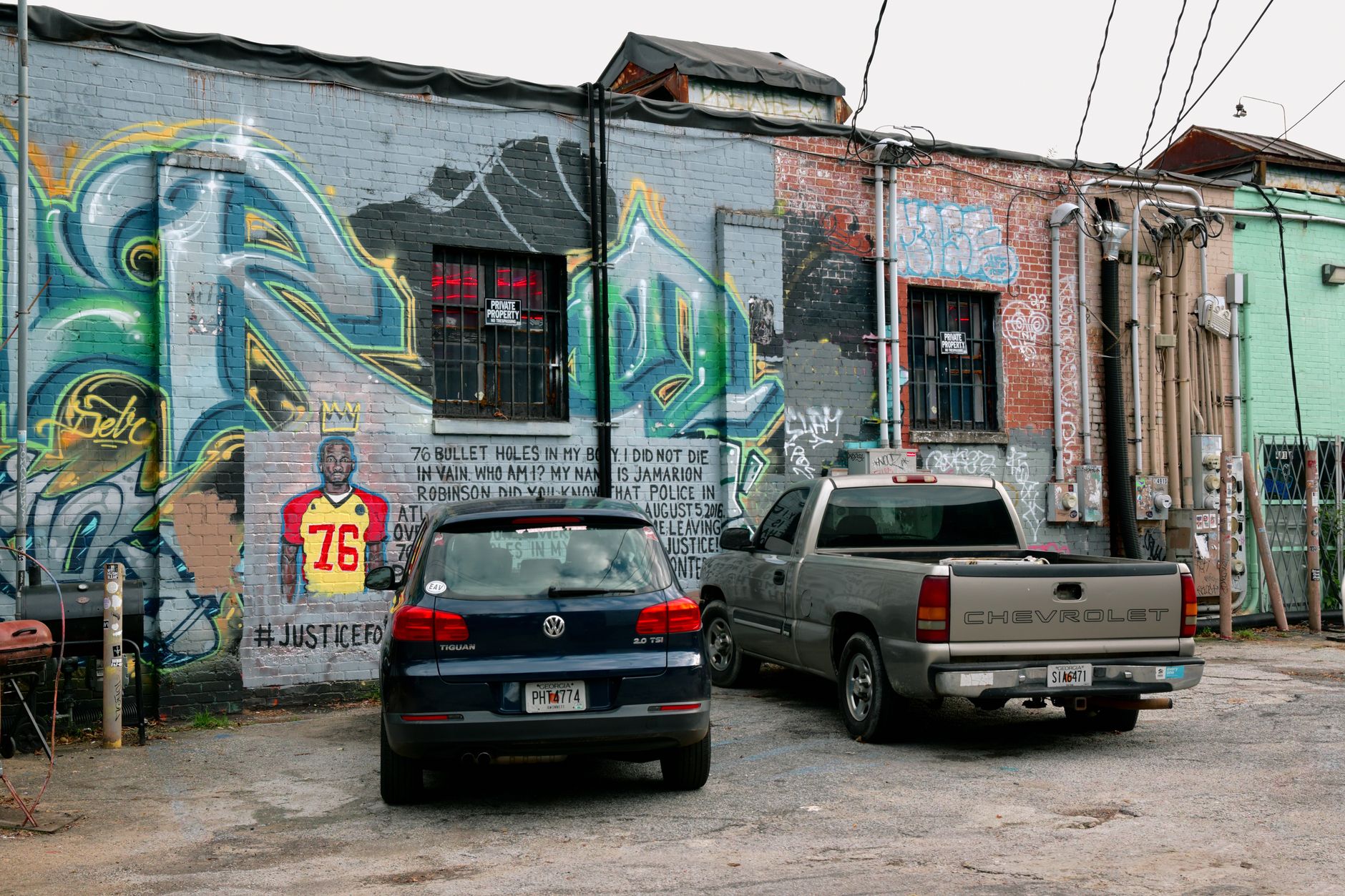
Old Fourth Ward is adjacent, and the contrast between the two tells you a lot about how Atlanta’s redevelopment has gone. O4W has gentrified quickly since around 2012, with median home values roughly doubling in a decade. Some of the original character has thinned out. But the Krog Street Tunnel sits right on the O4W-Reynoldstown border, and that alone is worth the trip. It’s a legal graffiti wall drawing over 500 artists annually, with layers of paint going back years and new work appearing within days of old work being covered.
Summerhill, just south of here, is newer to the conversation. Local organizations have worked to keep longtime residents involved in what gets built following the 2021 development push around the Braves’ former footprint. It’s early, and I’d be cautious about calling it fully arrived, but the Georgia Avenue commercial strip has genuine momentum.
Where the BeltLine Ties It Together
The Atlanta BeltLine is a 22-mile loop of repurposed rail corridor connecting 45 neighborhoods, and it’s the single best way to move between the areas above on foot or by bike. The Eastside Trail alone runs about 2.25 miles and passes directly through Old Fourth Ward and Inman Park. On a Saturday morning you’ll share the path with cyclists, families, and a few people who clearly just want to sit on a bench and watch the murals.
The BeltLine’s public art program has commissioned over 100 permanent works since 2012, most of them large-scale and site-specific. A few are genuinely great, some are fine, and one or two make you wonder about the selection committee (honest assessment). The best neighborhoods in Atlanta for art and local culture tend to cluster within about four blocks of the trail, which isn’t a coincidence. The BeltLine created foot traffic, and foot traffic sustained the creative businesses around it.
If you have one day and want to cover the most ground, start at Krog Street Tunnel, walk north on the Eastside Trail to Ponce City Market, then double back through Sweet Auburn on foot. That’s roughly five miles and about four hours at a relaxed pace. You’ll hit warehouses, murals, history, and at least three places worth stopping for food.
FAQs
What is the art district in Atlanta?
Castleberry Hill is Atlanta’s official arts district, designated in 1995. It holds around 30 studios and galleries in converted warehouses just southwest of downtown.
Is Little Five Points safe to visit?
Generally yes, especially during the day and on evenings when the strip is active. Like any urban neighborhood, stay aware of your surroundings after midnight on quiet side streets.
What neighborhood has the best street art in Atlanta?
The Krog Street Tunnel in Old Fourth Ward draws over 500 artists a year and refreshes constantly. The BeltLine Eastside Trail is a close second for sheer volume of murals.