The best Mediterranean food in Atlanta gets written off by a lot of people as “basically just Greek food.” That’s the wrong mental model. Mediterranean cuisine pulls from Lebanon, Turkey, Morocco, Israel, and Spain, and Atlanta has restaurants doing all of it well if you know where to look past the chains on Peachtree.
Most of the genuinely good spots are small, family-run, and not particularly Instagram-famous. A few have been open for over a decade without much press. Prices are reasonable too — expect $15 to $30 per person for a full meal with drinks at most of these places, closer to $12 if you’re getting a lunch plate.
I’ve eaten my way through a solid chunk of Atlanta‘s Mediterranean scene over the last few years. What follows is the honest version of that research, not a list padded out with places I haven’t visited.
Top 10 Restaurants Ranked
These are ranked loosely by overall consistency, not just one great dish. A place that nails its shawarma but serves mediocre sides ranks lower than one that’s solid across the board.
- Wa-Ha-Ka (Decatur) — Lebanese-leaning, incredible fattoush
- Zakia Mediterranean Kitchen (Buckhead) — strong lamb kofta, $18 average plate
- Cafe Agora (Midtown) — Turkish-Greek hybrid, good for groups
- Alon’s Bakery (Virginia-Highland) — not strictly a restaurant but their mezze board is worth it
- Nile Ethiopian & Mediterranean (Old Fourth Ward) — unusual crossover, works surprisingly well
- Taziki’s (multiple locations) — technically a chain, but a regional one with above-average quality
- El Kiosco (Buford Highway) — Spanish Mediterranean, paella on weekends only
- Dinho’s (Sandy Springs) — small menu, but the grilled branzino is the best in the city
- Momos (East Atlanta) — falafel wraps that hold up against anything in Decatur
- Yalla (Ponce City Market) — Israeli street food, fast-casual format, lines at lunch
Yalla gets crowded fast on weekday lunches, so go early or after 1:30. Dinho’s doesn’t take reservations on weekdays, which I learned the hard way on a Friday night.
Signature Dishes to Try
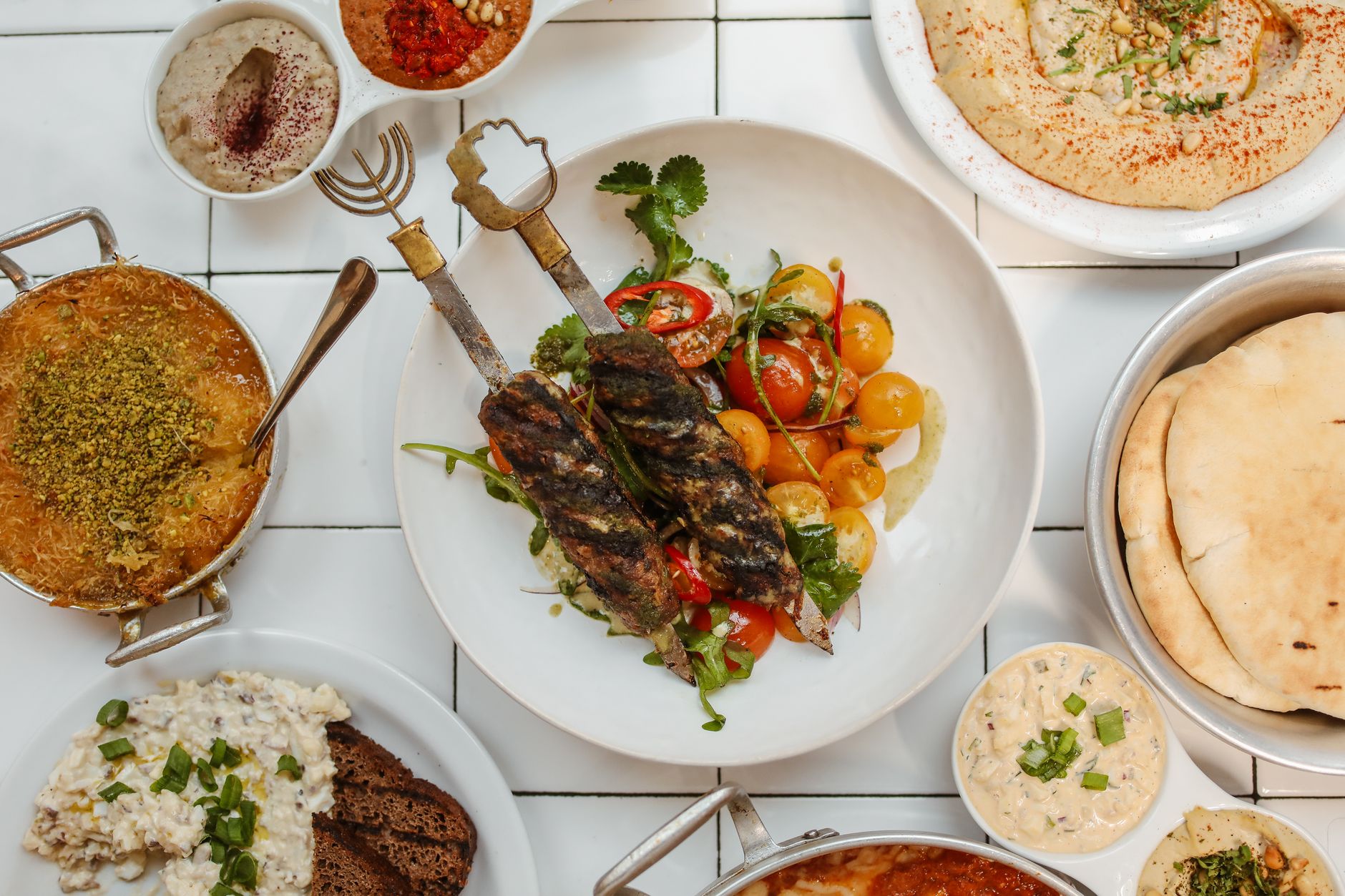
If you’re newer to this cuisine, start with hummus, but order it somewhere that makes it in-house. The texture difference is real. Store-bought versions are thicker and more acidic; fresh hummus has a silkier, almost nutty quality. Cafe Agora and Yalla both do it properly.
Falafel is worth ordering at two or three different spots because the variation is bigger than you’d expect. Some kitchens fry them to order; others batch-cook. Momos fries to order, and it shows — crispy outside, bright green inside from fresh herb. That green interior is what you’re looking for.
Shawarma is the dish most people come in expecting, and it’s the one where Atlanta’s spots are most inconsistent. Zakia does a solid chicken version. For lamb shawarma specifically, Wa-Ha-Ka is the better call. They use a proper vertical spit, not a flat grill.
- Kibbeh (Zakia, $9 for four pieces)
- Spanakopita (Cafe Agora, better at lunch when it’s fresh)
- Shakshuka (Yalla, available all day)
- Grilled octopus (El Kiosco, market price, usually around $22)
Neighborhood Hotspots
Midtown is the easiest neighborhood to start with. Cafe Agora sits on 10th Street and has decent parking by Atlanta standards, and it’s reliably open for both lunch and dinner, which isn’t guaranteed at every spot on this list.
Decatur has the most concentrated options and, honestly, tends to draw more serious kitchens. Wa-Ha-Ka is the anchor there. The whole downtown Decatur square has enough foot traffic that restaurants can focus on quality rather than volume, and you feel that in the food.
Buford Highway deserves a mention even though it’s less obvious for Mediterranean specifically. El Kiosco sits among the corridor’s better-known Asian and Latin spots but holds its own. Parking is easier out there than Midtown, and the crowd is less self-conscious about ordering adventurously.
Ponce City Market (Yalla) and Virginia-Highland (Alon’s) are good options if you’re already nearby, but I wouldn’t make a special trip solely for them when Decatur offers more in one stop.
Health Benefits of Mediterranean Food
This comes up a lot because people genuinely want to eat well while eating out. The Mediterranean diet framework, olive oil, legumes, fresh vegetables, fish, moderate meat, aligns naturally with what most of these restaurants are already serving. You’re not forcing a diet onto a cuisine; it just works that way.
Falafel is chickpea-based and genuinely high in protein and fiber. Hummus is too. Grilled fish like branzino at Dinho’s is lean and high in omega-3s. Even the bread-heavy dishes tend to use pita that’s lighter in refined starch than a deli sandwich roll.
The main thing to watch is portion size on mezze spreads. They’re easy to overeat because every dish is good and they keep arriving. A shared mezze for two at Cafe Agora can run 1,400 calories before you’ve ordered a main, so worth knowing going in.
Atlanta’s Hidden Gems
The best Mediterranean food in Atlanta isn’t hard to find once you step off the obvious path. The places most worth visiting share a few traits: small menus, in-house prep, and usually a family behind the counter who’s been cooking this food their whole life rather than a chef who pivoted to it last year.
Dinho’s is the one I’d send a skeptic to first. One visit to that branzino and the conversation about whether Atlanta has a real Mediterranean scene tends to end. Wa-Ha-Ka is the second recommendation, especially for anyone who thinks they don’t like Lebanese food because a bad version put them off.
Budget $20 to $25 per person to eat well at any spot on this list. And don’t skip the mezze just because you came for a main; that’s where most of these kitchens show what they actually know.
FAQs
What is the best Mediterranean restaurant in Atlanta?
Wa-Ha-Ka in Decatur is the most consistent overall, with Cafe Agora in Midtown a close second for groups and first-timers.
How much should I budget for a meal?
Plan on $15 to $25 per person for a full sit-down meal; fast-casual spots like Yalla run closer to $12 at lunch.
What are the must-try dishes in Mediterranean cuisine?
Start with hummus, falafel, and shawarma, then work toward kibbeh and grilled fish once you’ve got a feel for the kitchen.